Currency markets rarely move in isolation.
Every move reflects a comparison between economies, policies, and expectations. That is why major currency pairs sit at the center of global finance. They capture how investors view the balance between the world’s largest economic regions.
In 2026, three currencies are shaping most of the conversation.
The U.S. dollar.
The euro.
And the Japanese yen.
Each one tells a different story.
And understanding those stories is essential for anyone trying to make sense of current global macro trends.
Why major currency pairs matter so much
Currencies influence more than just forex traders.
They affect trade flows, investment returns, inflation dynamics, and capital movement across borders. That is why major currency pairs are closely watched by investors in every asset class.
When currencies shift, they send signals.
A strong dollar may reflect confidence in the U.S. economy or higher interest rates.
A stronger euro may suggest improving conditions in Europe.
A weaker yen may point to policy differences or capital outflows.
These signals help investors understand what is happening beneath the surface.
The U.S. dollar: Still the dominant force
The dollar remains the most important currency in the world.
It is used in global trade, held in reserves, and widely used in financial transactions. This gives it a unique position within major currency pairs.
In 2026, the dollar’s strength continues to be influenced by interest rates and economic performance.
When U.S. rates are higher, capital tends to flow toward dollar assets.
This supports the currency.
At the same time, the dollar also acts as a safe haven.
During periods of uncertainty, investors often move toward it, increasing demand and strengthening its position further.
This combination makes the dollar a central player in forex analysis.

The euro: A story of balance and recovery
The euro represents a group of economies rather than a single country.
This makes its movement more complex.
In 2026, the euro is influenced by growth expectations, inflation control, and policy decisions across the eurozone. When conditions improve, the euro tends to gain support.
When challenges appear, it can weaken.
This creates a dynamic relationship with the dollar.
The USD vs EUR pair is one of the most closely watched in the market because it reflects the balance between two major economic regions.
Investors use this pair to gauge relative strength.
The yen: A currency shaped by policy differences
The yen tells a very different story.
It has been heavily influenced by interest rate differences and capital flows. Lower rates have made it less attractive for yield-focused investors, which has contributed to its weakness.
This creates a unique role within major currency pairs.
The yen outlook often depends on policy decisions and how they compare to other regions. When differences widen, the yen can weaken further.
When conditions shift, it can move quickly in the opposite direction.
This makes it one of the more sensitive currencies in the market.
How these currencies interact
The most important thing to understand is that these currencies do not move independently.
They are constantly interacting.
When the dollar strengthens, it often means another currency is weakening.
When the euro rises, it reflects changes relative to the dollar.
When the yen moves, it often signals broader shifts in capital flows.
This interaction is what makes major currency pairs so important.
They provide a real-time comparison of global economic conditions.
Interest rates drive the core narrative
At the center of these movements is interest rates.
Differences in rates influence where investors allocate capital. Higher rates attract investment. Lower rates can push it away.
This creates ongoing movement in major currency pairs.
Investors constantly compare rate expectations across regions. These comparisons shape forex analysis and influence currency direction.
This is why central bank decisions are closely watched.
Economic strength and perception
Currencies are also influenced by economic strength.
Growth, employment, and inflation all play a role.
When an economy appears strong, its currency often benefits.
When it weakens, the currency may lose support.
This perception matters as much as reality.
Markets react to expectations, not just current data. This makes currency movement more dynamic and sometimes unpredictable.
The role of global macro trends
Broader global macro trends play a major role in shaping currencies.
These include shifts in trade, geopolitical developments, and global investment flows. When these trends change, currencies respond.
For example, changes in trade patterns can affect demand for certain currencies.
Geopolitical tension can increase demand for safe assets.
These factors add another layer to forex analysis.
Why investors should pay attention
Even if you do not trade currencies directly, they still affect your portfolio.
Currency movements influence international investments.
They can increase or decrease returns when assets are converted back into your home currency.
This makes understanding major currency pairs important for all investors.
Ignoring currency effects can lead to unexpected outcomes.
Short-term moves vs long-term trends
Currency markets operate on multiple timeframes.
Short-term moves can be driven by news, data releases, or sudden changes in sentiment.
Long-term trends are shaped by structural factors such as interest rates and economic growth.
Investors need to consider both.
Focusing only on short-term movements can lead to reactive decisions. Understanding longer-term trends provides better context.
Strategy considerations
When looking at major currency pairs, investors should focus on a few key elements.
Interest rate differences.
Economic performance.
Policy direction.
Market expectations.
These factors help build a clearer picture of where currencies may be heading.
This approach supports more informed forex analysis.
Why 2026 is a key moment
The current environment makes currency movements more important.
Economic conditions are not aligned.
Policy paths differ.
Capital flows are shifting.
All of this increases the importance of major currency pairs in understanding the global market.
For investors, this means paying closer attention to currency dynamics.
Final thoughts
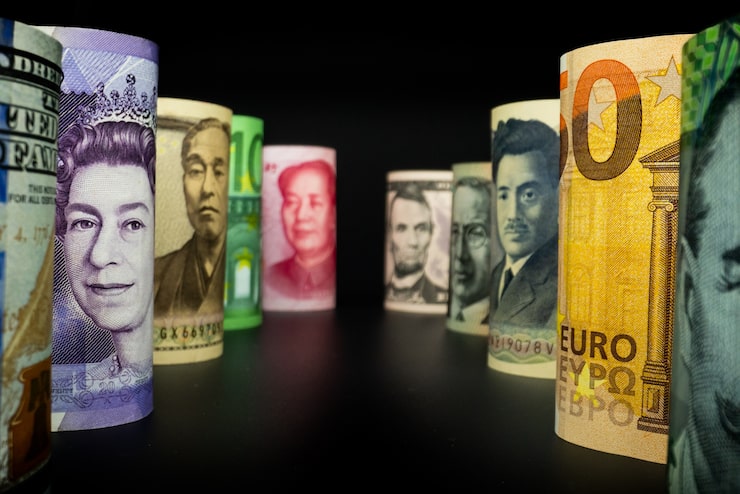
The dollar, euro, and yen each represent different parts of the global economy.
Together, they form the core of major currency pairs and provide valuable insight into market conditions.
Understanding how these currencies interact helps investors make better decisions.
By focusing on USD vs EUR, monitoring the yen outlook, and keeping track of broader global macro trends, investors can gain a clearer view of what is driving markets in 2026.
Currencies may not always be the most visible part of investing.
But they are one of the most important.