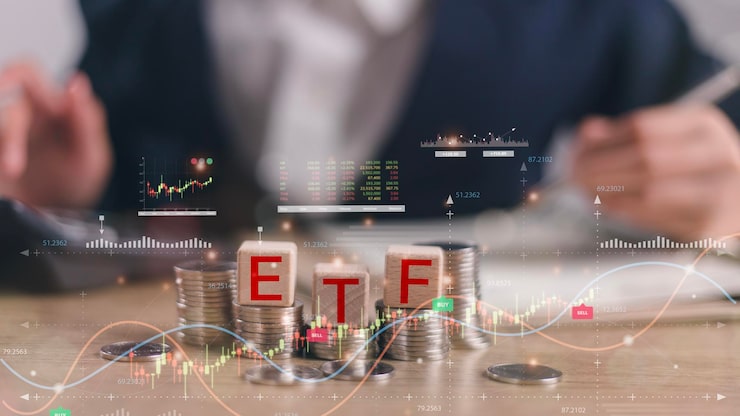
For a long time, tokenization sounded like one of those ideas that people in crypto talked about more than traditional investors did.
It felt interesting, but distant.
There was always a sense that it might matter one day, though not necessarily yet. In 2026, that view is becoming harder to defend. Tokenized assets are moving out of the purely experimental stage and into a more serious financial conversation. Large institutions, digital asset specialists, and financial infrastructure players are all treating tokenization less like a side project and more like a real part of modern capital markets. The World Economic Forum has described asset tokenization as accelerating in 2026, with blockchain increasingly becoming infrastructure rather than just an experimental layer.
That shift matters because tokenization is easier to understand than many people assume.
At its core, it is about representing ownership or rights to an underlying asset in digital form. That asset might be a fund share, a bond, a property interest, a private credit exposure, or another form of value that already exists in the traditional financial system. The token itself is not magically creating value. It is changing how ownership is recorded, transferred, and managed.
This is why tokenized assets are getting more attention now.
The idea is no longer just about crypto-native products. It is increasingly about whether financial assets can become easier to transfer, more transparent to manage, and more flexible to access.
What tokenized assets actually mean
The term sounds technical, but the core idea is fairly simple.
A tokenized asset is a digital representation of a claim, interest, or ownership right tied to something real. That “real” thing can be financial, such as a bond or fund share, or physical, such as property or another asset with recognized economic value. In both cases, the token acts as a digital wrapper around the ownership logic.
That is why digital ownership is such an important part of the discussion.
Ownership has traditionally been managed through layers of custodians, registries, legal structures, paperwork, and settlement systems. Tokenization does not erase the legal side of ownership, but it can change how efficiently that ownership is recorded and moved. In other words, the value is not just in turning an asset into a token. The value is in potentially improving the system around it.
This is where financial innovation starts becoming real rather than theoretical.
Why tokenization is getting more attention in 2026
The reason is not just hype.
Markets are becoming more interested in systems that reduce friction. Investors, institutions, and infrastructure providers all want faster settlement, cleaner records, and easier movement of value. That does not mean traditional systems disappear. It means pressure is building to improve how those systems work.
Tokenization fits that pressure well.
The World Economic Forum’s 2026 digital assets outlook argues that regulatory clarity is helping digital asset adoption scale, and that tokenization is increasingly affecting capital markets, liquidity, and access to investment products. That is an important signal because it shows the conversation is no longer only about new technology. It is about market design.
The more financial firms start asking how to improve settlement, access, and efficiency, the more relevant tokenized assets become.
Real-world assets are leading the way
One of the strongest signs of maturity is that the focus has moved toward real world assets.
For a while, tokenization conversations stayed close to digital-native assets. Now the emphasis is increasingly on traditional financial instruments and real economic exposures coming on-chain in some form. That includes money-market style products, private credit exposures, real estate-related structures, and tokenized cash or deposit platforms.
This is where the market becomes much more serious.
It is one thing to launch a token tied to a speculative digital product. It is another thing to bring regulated or institutionally relevant exposures into tokenized form. That is why tokenized assets are attracting attention from a broader set of financial actors. The market is not just asking whether tokenization is possible. It is asking where it becomes useful enough to matter.
That is a very different stage of adoption.
Tokenized cash is helping move the concept closer to finance
One of the clearest signs that tokenization is entering mainstream finance is the move toward tokenized cash and deposit-like settlement tools.
When banks and institutional platforms begin exploring 24/7 tokenized settlement models, the tokenization discussion starts looking less like a niche blockchain debate and more like a financial infrastructure debate. The Wall Street Journal reported in March that Bank of Montreal planned a tokenized cash platform for institutional clients, aimed at secure, around-the-clock fund transfers and settlement-linked uses such as margin activity, treasury operations, and programmable finance.
That matters because cash settlement sits at the center of finance.
If tokenization starts improving how money moves between institutions, the whole idea becomes easier to take seriously. It no longer depends on people believing in a distant future. It starts solving a current operational problem.
That is one of the strongest reasons tokenized assets feel more relevant in 2026.
Tokenization can improve access, but that is not the whole story
A lot of people focus first on fractional access.
That is understandable. If an asset can be divided into smaller units, it may become easier for more participants to invest. That is a real benefit in some markets, especially where minimum capital thresholds have traditionally been high.
But access is only one part of the case.
The deeper argument is about process. Tokenized assets may improve transferability, simplify parts of administration, and make some assets easier to track across systems. That can matter just as much as fractionalization, especially for institutions managing complex portfolios or trying to reduce friction in settlement.
This is where blockchain investing becomes more practical.
It is less about buying blockchain-themed speculation and more about understanding how blockchain-based systems might improve real asset operations.
Mainstream finance is interested, but still cautious
It would be a mistake to talk about tokenization as if the system has already fully changed.
It has not.
Mainstream finance is interested, but it is also cautious. Institutions care about legal clarity, control frameworks, infrastructure design, and whether tokenized systems can work alongside legacy systems without creating new risks. Citi’s June 2026 tokenization report made this point clearly by noting that institutions are likely to run on-chain and legacy processes in parallel for some time, which can delay the full realization of efficiency gains.
That is an important reality check.
Tokenization may be promising, but transition costs and operational complexity are real. Financial systems do not rebuild themselves overnight. They usually evolve through overlap, testing, and selective adoption before any broader shift becomes visible.
That means financial innovation in this area is likely to be gradual, not instant.
Regulation is becoming part of the mainstream story
A market only moves into mainstream finance when regulation becomes part of the conversation.
That is happening now.
The more tokenization touches real securities, cash products, and institutional use cases, the more regulators pay attention. Reuters reported in February that China tightened oversight of offshore tokenized asset-backed securities linked to onshore assets, showing that authorities are not ignoring the growth of tokenized structures even where the market remains early.
This matters because regulation can do two things at once.
It can slow careless growth, and it can increase trust for more serious participants. If tokenization is going to become part of mainstream finance, it will almost certainly do so inside clearer regulatory boundaries rather than outside them.
That may frustrate some parts of the market.
But it is also part of what makes tokenized assets more credible.
The infrastructure story may matter more than the asset story
One of the most overlooked parts of tokenization is infrastructure.
People often get excited about which asset will be tokenized next, but the more important question may be how the infrastructure is built. Interoperability, control frameworks, identity checks, custody design, and settlement logic all matter. Citi’s 2026 work on tokenization argues that infrastructure design choices will play a critical role as adoption grows.
This is one reason the opportunity is bigger than individual tokens.
If the underlying rails improve, many different types of real world assets may eventually benefit. If the rails remain fragmented, the value of tokenization may stay limited no matter how attractive the concept sounds.
That is why serious investors and institutions are increasingly paying attention to the system, not just the product.
Tokenization is moving from idea to execution
Another sign of maturity is that actual businesses are starting to hit operational milestones.
This is no longer only about forecasts and white papers. Financial News reported in March that London fintech Ctrl Alt had surpassed $1 billion in tokenized assets while expanding internationally, with activity spanning areas like real estate, private credit, and litigation finance.
That does not prove tokenization has already gone fully mainstream.
But it does show that execution is happening. And execution matters more than theory. The market gets taken seriously when people stop asking whether something can exist and start asking how large it can become, how efficiently it can operate, and where it fits in the broader financial system.
That is exactly where tokenized assets seem to be heading.
Final thoughts
Tokenized assets are moving into mainstream finance because the conversation has changed.
It is no longer only about crypto enthusiasm. It is about making asset ownership, transfer, and settlement more efficient inside a financial system that increasingly wants faster, more flexible infrastructure. That is why real world assets, digital ownership, and the practical side of blockchain investing are getting more serious attention now.
The shift is still early.
Legacy systems still matter. Regulation is still evolving. Infrastructure design still needs work. But the direction is clearer than it used to be. Tokenization is no longer just an interesting concept floating around the edge of finance.
It is becoming part of how finance may actually work.
And that is what turns financial innovation into a market story worth taking seriously.