Index funds are often described as a simple way to diversify.
Instead of choosing individual stocks, investors can buy a broad group of companies through a single fund. This approach can reduce the risk of relying too heavily on one business or one investment idea.
But diversification is not always as broad as it appears.
In recent years, the largest technology companies have grown into an increasingly important part of major stock market indexes. Because many of these companies are closely tied to artificial intelligence, investors may now have far more AI exposure than they realize.
This is where index fund concentration becomes important.
A fund may own hundreds of stocks, yet a relatively small number of companies can still drive a large share of its performance. That means an investor who believes they are holding a neutral slice of the market may actually be making a significant bet on AI, large technology companies, and a narrow group of market leaders.
Why Index Funds Can Become Concentrated
Many popular indexes are weighted by market capitalization.
This means the largest companies receive the largest positions in the index. As a company’s market value rises, its influence over the fund also increases.
The structure is simple.
A company worth significantly more than its competitors will automatically become a larger part of the index. Investors do not need to make an active decision to increase exposure. The index does it for them.
This is one reason index fund concentration can develop quietly.
As the biggest AI-related companies continue growing, they take up more space inside broad market funds. The fund still owns many businesses, but the largest holdings may have a much greater effect on returns than the rest.
Broad Ownership Does Not Always Mean Broad Risk
An index fund may hold hundreds of stocks.
That sounds highly diversified, and in one sense it is. The investor owns businesses from different industries, regions, and parts of the economy.
However, the number of holdings does not tell the entire story.
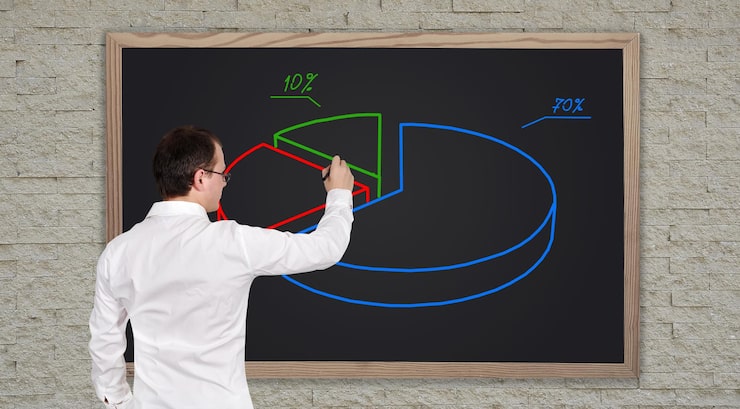
If the top ten companies represent a large share of the fund, then overall performance may depend heavily on those names. A sharp move in a few major technology stocks can outweigh what is happening across dozens or even hundreds of smaller holdings.
This creates passive investing risk.
The fund may be broad by company count but narrow by economic influence. Investors need to look beyond the total number of holdings and examine how much weight is concentrated at the top.
AI Is Increasing the Influence of Market Leaders
Artificial intelligence has become one of the strongest investment themes in the market.
Companies connected to chips, cloud computing, software, data centers, and digital advertising have attracted significant investor interest. Many of these businesses were already among the largest companies in major indexes before the AI boom began.
Their growth has increased their influence even further.
This means broad market investors may now have substantial AI exposure without purchasing a dedicated AI fund. They may believe they are simply investing in the overall economy, while a meaningful portion of their returns depends on a group of companies tied to the same long-term theme.
That exposure is not automatically bad.
The problem begins when investors do not recognize it.
Index Construction Shapes Investor Outcomes
Understanding index construction is essential because not all indexes are built the same way.
A market-cap-weighted index gives more influence to the largest companies. An equal-weighted index gives every holding a similar allocation. Other indexes may use revenue, dividends, volatility, profitability, or other factors to determine position size.
These different methods can produce very different portfolios.
Two funds may both be described as broad U.S. stock market investments, but one may be heavily influenced by a small group of technology leaders while another spreads its exposure more evenly.
This is why investors should not assume every index fund offers the same type of diversification.
The rules behind the fund matter.
Passive Investing Still Involves Active Choices
The word passive can be misleading.
An investor may not be selecting individual stocks, but someone still decides which index to follow. The index provider also chooses the rules, eligibility requirements, and weighting method.
These decisions shape the portfolio.
Choosing a large-cap market-weighted fund is different from choosing an equal-weighted fund, a total-market fund, or a value-focused index. Each one reflects a different approach to risk and opportunity.
This means passive investing risk is not simply about market declines.
It also includes the risk of following an index whose structure creates more concentration than the investor intended.
Portfolio Overlap Can Make the Problem Worse
Many investors own several funds and assume they are diversified because the fund names are different.
That assumption can be dangerous.
A broad market fund, a technology fund, a growth fund, and an AI-focused ETF may all hold many of the same companies. The investor may think they own four different strategies, but their largest positions may be repeated across every fund.
This is known as portfolio overlap.
It can create much more concentration than the investor realizes. A company that appears as a 6 percent position in one fund may also appear in several others, increasing the true exposure across the entire portfolio.
Fund labels are not enough.
Investors need to review the actual holdings.

Why Concentration Can Help During Strong Markets
Concentration is not always harmful.
When the largest companies perform well, market-cap-weighted index funds can benefit significantly. Investors receive greater exposure to the strongest winners automatically.
This has been one of the attractions of broad index investing.
Successful companies grow, their weights increase, and the index captures more of their gains. There is no need to predict which stock will become a market leader in advance.
This can make index fund concentration feel like a strength during a powerful rally.
However, the same structure can become a weakness when leadership changes.
What Happens When Market Leadership Reverses
Every market cycle eventually changes.
Companies that lead for years can slow down, face stronger competition, or become too expensive relative to future growth. Investor expectations may also rise to a point where even strong results are not enough.
When that happens, concentrated indexes can fall harder than investors expect.
If a small group of companies has driven much of the market’s gain, those same businesses can also drive a large part of the decline. The rest of the index may not be large enough to offset the damage.
This is one of the main concerns behind index fund concentration.
A portfolio that looked diversified in a rising market may suddenly reveal how dependent it was on a narrow group of winners.
AI Exposure Can Carry Common Risks
The largest AI-related companies often operate in different areas.
Some design chips. Others run cloud platforms, develop software, sell advertising, or build consumer devices.
Even so, they may share several risks.
They can be affected by changes in AI spending, regulation, energy costs, data center demand, technology competition, and investor expectations. If sentiment toward AI weakens, several large holdings may fall at the same time.
This creates a form of common risk.
Owning different companies does not provide full diversification when those companies are exposed to the same market narrative.
That is why hidden AI exposure deserves attention.
High Valuations Increase the Importance of Expectations
Large market leaders often trade at premium valuations.
Investors are willing to pay more because they expect strong growth, dominant market positions, and future profits from new technologies.
The challenge is that high expectations leave less room for disappointment.
A company can continue growing and still see its share price decline if results fail to meet optimistic forecasts. The business does not need to collapse for the investment to struggle.
This matters in concentrated indexes.
When highly valued companies represent a large portion of the fund, the entire portfolio becomes more sensitive to changes in expectations.
Total-Market Funds May Still Have Similar Exposure
Some investors respond to concentration concerns by choosing total-market funds.
These funds hold large, medium, and small companies, which appears to offer broader diversification.
That can help, but the improvement may be smaller than expected.
Because total-market indexes are often weighted by market capitalization, the largest companies may still dominate. Smaller businesses are included, but their individual weights can be very limited.
This is another example of why index construction matters more than the number of holdings.
A total-market fund can still carry meaningful concentration at the top.
Equal-Weight Funds Offer a Different Approach
Equal-weight funds give each company a similar position.
This reduces the influence of the largest stocks and increases exposure to companies that would receive smaller weights in a market-cap-based index.
That can reduce concentration.
It may also create more exposure to mid-sized companies and sectors outside technology. However, equal-weight funds come with their own tradeoffs.
They often require more frequent rebalancing, which can increase costs and turnover. They may also lag when the largest companies continue leading the market.
Equal weighting is not automatically better.
It is simply a different form of index construction.
Dedicated AI Funds Can Add More Overlap
Investors interested in artificial intelligence may buy a specialized AI fund in addition to their core index holdings.
This can make sense if they want more exposure to the theme.
But it can also create unnecessary portfolio overlap.
If the dedicated fund owns the same large technology companies already dominating the investor’s broad market fund, the new investment may not add much diversification. It may simply increase the size of positions the investor already owns.
This is why investors should compare holdings before adding thematic funds.
A new fund should bring something different to the portfolio, not just repeat the same names under another label.
How Investors Can Measure Their Real Exposure
The first step is reviewing the top holdings of every fund.
Investors should look at the percentage allocated to the largest companies and identify which names appear across multiple funds.
They should also group holdings by theme.
A company may be classified as technology, communication services, or consumer discretionary, yet still depend heavily on AI-related growth. Sector labels may therefore understate the true level of concentration.
Looking at the portfolio as a whole provides a clearer picture.
This helps investors identify hidden AI exposure, repeated holdings, and areas where risk may be more concentrated than expected.
Diversification Does Not Require Abandoning Index Funds
Concentration concerns do not mean broad index funds are poor investments.
They remain useful tools for many investors because they offer low costs, simple access, and exposure to a wide group of businesses.
The goal is not to avoid them.
The goal is to understand what they actually own.
An investor may decide that the concentration is acceptable because they believe in the long-term strength of the leading companies. Another investor may reduce the risk by adding equal-weight, small-cap, international, value, or defensive exposure.
The right decision depends on the overall portfolio.
Final Thoughts
An index fund can be diversified and concentrated at the same time.
It may own hundreds of companies, yet still depend heavily on a small group of AI-related market leaders. That is why index fund concentration deserves more attention.
Investors should understand how index construction affects position sizes, how portfolio overlap can increase hidden risk, and how much AI exposure they already hold through ordinary broad market funds.
The issue is not that AI exposure is automatically dangerous.
The issue is whether the investor chose it knowingly.
A portfolio should reflect a deliberate strategy, not an accidental collection of repeated positions. By looking beyond fund labels and reviewing the actual holdings, investors can make better decisions about diversification, concentration, and the level of risk they are truly taking.