A volatile market does not only test portfolios.
It tests people.
Prices can move sharply for reasons that feel logical one day and completely irrational the next. A stock can look strong in the morning and fragile by the afternoon. A broad rally can suddenly turn into fear, and fear can turn back into optimism just as quickly.
That is why investor psychology matters so much.
Most people like to believe they make decisions based on logic, research, and discipline. In reality, market stress brings emotion into the process far faster than most investors expect. That does not mean investors are careless. It means they are human.
And in a high-volatility market, human reactions become part of the investment result.
This is where the real challenge begins.
A strong portfolio can still suffer if the investor behind it reacts poorly. A reasonable long-term plan can break down if panic, greed, frustration, or impatience start taking control. That is why understanding investor psychology is not a side topic. It is one of the most practical parts of investing.
Why volatility changes behavior so quickly
When markets are calm, discipline feels easy.
You can tell yourself you are a long-term investor. You can say you will buy quality companies, ignore short-term noise, and stay focused on the bigger picture. That mindset sounds strong when prices are stable.
Volatility changes everything.
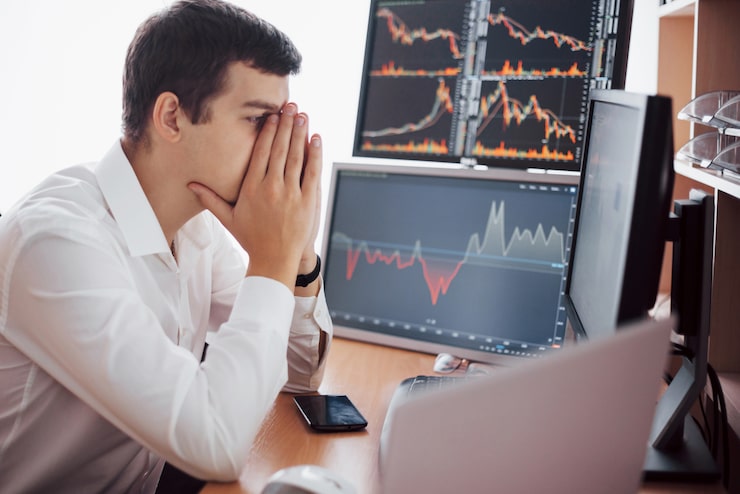
Once prices start moving quickly, the emotional side of investing becomes much louder. Gains feel more urgent. Losses feel more personal. News feels more threatening. Investors stop looking only at the asset and start reacting to what the price movement is making them feel.
This is why market behavior often becomes more extreme in volatile periods.
A market move is not just information. It becomes a trigger. One investor sees risk and sells. Another sees opportunity and buys. A third freezes and does nothing. The same chart creates three different reactions, and each one comes from psychology as much as analysis.
Fear usually arrives faster than logic
One of the most powerful forces in markets is fear.
Fear is fast. It does not wait for a perfect spreadsheet or a fully balanced argument. It reacts to danger first and asks questions later. That made sense for human survival, but it creates problems in investing.
When prices fall quickly, fear tells investors to get out.
It does not care whether the business is still solid or whether the decline may be temporary. It cares about stopping the pain. This is where emotional investing becomes dangerous, because fear often pushes people to sell when they should be thinking more carefully.
A falling market can make rational investors feel irrational pressure.
Even people with strong plans may suddenly start looking for escape rather than perspective. That is one reason so many investors lock in losses at the worst possible moments. Their decisions stop being about value and start being about relief.
Greed is quieter, but just as dangerous
Fear gets more attention, but greed causes just as many problems.
In a rising or fast-moving market, greed rarely introduces itself that way. It usually sounds more respectable. It says things like, “I should increase this position,” or “This time is different,” or “I do not want to miss the next move.”
That is how greed hides inside confidence.
It often feels smart in the moment because it shows up when prices are moving higher and everyone feels rewarded. But in volatile markets, greed can lead investors to overpay, overconcentrate, or chase ideas they do not fully understand.
This is another side of investor psychology that matters.
People do not only make mistakes when they are afraid. They also make mistakes when they feel unstoppable. In many cases, greed creates the setup that fear later punishes.
Recency bias makes volatility feel bigger than it is
One of the most common psychological traps in investing is recency bias.
This happens when investors assume that what just happened will keep happening. If markets have been falling for a week, it suddenly feels like they will keep falling. If a certain stock has been rising for months, it starts feeling as if the rise is natural and permanent.
Volatile markets make this worse.
Because price action is so visible, recent movement starts shaping the entire story in an investor’s mind. Long-term context fades. The latest move becomes the truth. That is one reason market behavior can become exaggerated. Investors stop reacting to a full cycle and start reacting to the most recent candle on the chart.
This is where better decision making becomes essential.
Good investors do not pretend recent moves do not matter. They simply refuse to let recent moves define everything.
Losses feel heavier than gains
Another major force in investor psychology is the way people experience pain.
A loss usually feels stronger than an equivalent gain feels good. This matters because it changes how investors behave under stress. A portfolio dropping by a certain amount can create much more emotional pressure than the same amount of upside created confidence.
That imbalance affects choices.
It can lead people to sell too early after a decline. It can push them to avoid sensible risk even when opportunity is improving. It can also cause them to hold on to losing positions too long, hoping to get back to even, because accepting the loss feels too painful.
This is a major reason emotional investing often leads to weaker outcomes.
Investors are not only reacting to price. They are reacting to the emotional weight that price movement creates.
Risk tolerance is not what people say in calm markets
Many investors think they know their risk tolerance.
Then volatility arrives, and the truth becomes clearer.
It is easy to say you can handle swings when the market is trending upward. It is much harder to stay calm when your account is down, headlines are getting worse, and every day feels uncertain. This is when theoretical risk tolerance turns into real risk tolerance.
That difference matters a lot.
A portfolio is not well built simply because it looked good during calm conditions. It is well built if the investor can actually stay with it during stress. If the structure creates so much anxiety that panic becomes likely, then the portfolio may be too aggressive for the person holding it.
This is why investor psychology and risk tolerance are deeply connected.
A strong strategy has to fit the investor emotionally as well as mathematically.
Volatility can make bad information feel urgent
High-volatility markets create a strange environment.
Everyone suddenly has an opinion. News becomes louder. Predictions multiply. Social media fills with confidence from people who were invisible a week earlier. Investors start consuming more information, but more information does not always create better judgment.
In fact, it can do the opposite.
Too much noise often leads to poorer decision making because investors begin reacting to every headline instead of focusing on what actually matters. This is another common pattern in market behavior. The faster markets move, the more people confuse activity with insight.
That creates mental exhaustion.
And exhausted investors rarely make their best decisions.
Process matters more when emotions rise
The best defense against volatile markets is not pretending emotions disappear.
It is having a process strong enough to keep emotions from taking over.
A process can be simple. It might involve position sizing, clear time horizons, rebalancing rules, and knowing why an asset is in the portfolio in the first place. The goal is not perfection. The goal is to create structure when emotions start getting louder.
This is where investor psychology becomes practical rather than theoretical.
If you know you are vulnerable to panic selling, then build rules that slow you down. If you know you tend to chase momentum, then set standards around valuation and position size before the market gets exciting. If you know uncertainty makes you overtrade, then make patience part of the strategy.
That is what better decision making looks like in real life.
It is not emotion-free. It is emotion-aware.
Long-term investors still need emotional discipline
People often say long-term investing solves the psychological problem.
It helps, but it does not solve it on its own.
A long time horizon is useful only if the investor can actually stay committed to it during difficult stretches. That is why emotional discipline still matters. Long-term success often depends less on finding the perfect stock and more on avoiding self-inflicted mistakes during unstable periods.
This is one reason emotional investing can quietly hurt even intelligent people.
They may have the right thesis and the right time horizon, but if they cannot stay steady while the market becomes uncomfortable, they may never receive the benefit of being right.
Patience sounds simple.
In practice, patience is one of the hardest skills in investing.
Good portfolio structure reduces psychological pressure
A lot of psychological mistakes begin with structure.
If a portfolio is too concentrated, too leveraged, or too dependent on one narrow theme, volatility will naturally feel more frightening. The problem is not only the market move. It is the fact that the investor knows the portfolio has no room for error.
That is why portfolio design matters so much.
Better diversification, sensible position sizing, and alignment with real risk tolerance all reduce the emotional pressure that leads to panic decisions. Investors are much more likely to stay rational when they know the portfolio can survive a difficult period.
This is one of the most underrated parts of investor psychology.
Mental strength is easier when the portfolio itself is not constantly pushing the investor toward emotional extremes.
Final thoughts
A high-volatility market reveals more than price movement.
It reveals character, habits, weaknesses, and discipline.
That is why investor psychology matters so much. It shapes whether fear becomes panic, whether confidence becomes greed, and whether a solid plan survives the moment it is actually tested. Volatility does not create human emotion. It exposes it.
The goal is not to become emotionless.
The goal is to understand how emotional investing, market behavior, risk tolerance, and decision making all connect. Once investors understand that connection, they become less likely to treat every market move like an emergency and more likely to respond with structure instead of instinct.
That is what makes someone stronger in difficult markets.
Not the ability to predict every move.
The ability to stay steady while everyone else is reacting.