For many investors, currencies feel like a background detail.
Stocks move. Bonds react. Headlines focus on earnings, growth, and interest rates. But behind all of that, currencies are constantly shifting, quietly influencing outcomes in ways that are easy to overlook.
That is why currency volatility matters more than most investors think.
In 2026, global markets are more connected than ever. Capital moves quickly across borders. Economic conditions vary widely between regions. Central banks are not aligned. All of this creates movement in exchange rates, and that movement directly affects global portfolios.
If you are investing internationally, you are already exposed to it.
What currency volatility actually means
Currency volatility refers to how much exchange rates move over time.
Some currencies remain relatively stable.
Others fluctuate more frequently and more sharply.
These movements can happen for many reasons, including changes in interest rates, economic data, geopolitical events, and shifts in investor sentiment. When volatility increases, exchange rates can move quickly and unpredictably.
For investors, this creates both opportunity and risk.
Why volatility is more noticeable now
Currency markets are always active, but in 2026 volatility feels more visible.
This is largely due to differences between economies.
Some regions are growing faster.
Others are slowing down.
Inflation is uneven.
Interest rates are not aligned.
All of these factors contribute to exchange rate moves that are stronger and more persistent. When economies move in different directions, currencies reflect those differences.
This makes currency volatility a key part of the investment landscape.
How currency volatility affects portfolio returns
One of the most important impacts of currency volatility is on portfolio returns.
When you invest in a foreign asset, your return is not just based on the asset itself. It is also affected by the exchange rate between your home currency and the asset’s currency.
If the foreign currency strengthens, your returns may increase.
If it weakens, your returns may decrease.
This can happen even if the underlying investment performs well. A strong stock performance can be reduced by unfavorable currency movement. The reverse is also true.
That is why currency matters.
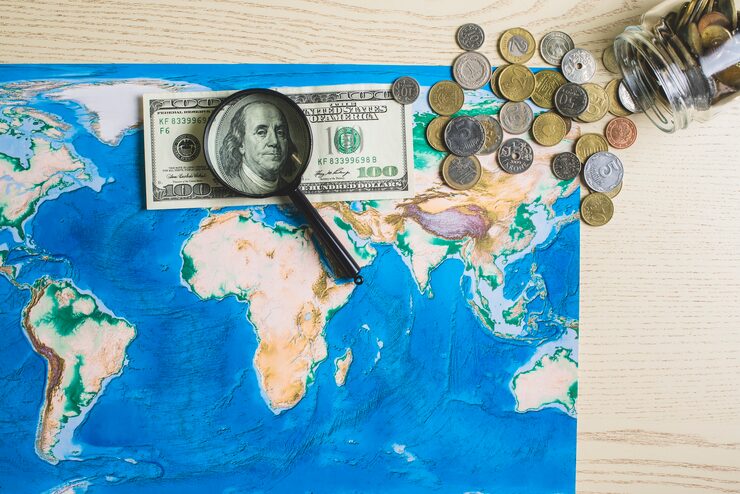
The hidden layer of foreign exchange risk
Many investors focus on market risk but overlook foreign exchange risk.
This is the risk that currency movements will impact investment outcomes.
It is often hidden.
Investors may not notice it until it affects returns. But once it becomes visible, it can have a meaningful impact on performance.
This is especially true for portfolios with significant international exposure.
Understanding this risk is essential for effective global investing.
Why diversification is not always enough
Diversification is a common strategy for managing risk.
But it does not always eliminate currency exposure.
A portfolio can be diversified across regions and still be affected by the same currency movements. If multiple investments are tied to currencies moving in the same direction, the impact can be larger than expected.
This is why currency volatility needs to be considered separately.
It is not just another layer of diversification.
It is a distinct factor.
How global investing increases currency exposure
As investors expand into international markets, currency volatility becomes more relevant.
Global investing offers access to new opportunities, but it also introduces exchange rate risk. This is the trade-off.
More exposure to different economies means more exposure to different currencies.
That does not mean global investing is a problem.
It simply means investors need to understand how currency movements affect their portfolio.
Short-term vs long-term impact
The effect of currency volatility depends on the time horizon.
In the short term, currency moves can be sharp and unpredictable. This can create noticeable swings in returns.
In the long term, the impact may balance out.
Currencies can move in cycles, and long-term investors may experience both gains and losses over time. However, this does not mean the impact disappears.
It means it becomes part of the overall return.
When volatility creates opportunity
While volatility introduces risk, it can also create opportunity.
Some investors actively use exchange rate moves to enhance returns. Others benefit indirectly when currency movements align with their investments.
For example, a strengthening currency can boost returns from international assets.
This is one reason why currency volatility is not always negative.
It depends on positioning.
The role of economic differences
Currency movements often reflect economic differences between regions.
Growth rates, inflation levels, and policy decisions all influence exchange rates. When these factors diverge, currencies respond.
This creates ongoing movement.
Understanding these differences helps explain why currency volatility occurs and how it may evolve.
Why investors should pay more attention
Many investors still treat currency as a secondary factor.
That approach can lead to surprises.
Ignoring foreign exchange risk means missing an important part of the investment equation. In a globally connected market, currency movements are not optional.
They are part of the outcome.
Paying attention to this factor can improve decision-making.
Managing currency exposure
Investors have different ways to approach currency volatility.
Some accept it as part of global investing.
Others try to reduce it through hedging or selective positioning.
The right approach depends on the investor’s goals, time horizon, and risk tolerance.
There is no single solution.
What matters is awareness.
Why 2026 is a turning point
The current environment makes currency volatility especially important.
Economic conditions are uneven.
Policy paths are different.
Global capital flows are shifting.
All of this increases the role of currency movements in portfolio outcomes.
For investors, this means currency risk can no longer be ignored.
Final thoughts
Currency volatility is a fundamental part of global investing.
It affects portfolio returns, introduces foreign exchange risk, and reflects broader economic differences across regions. In 2026, its importance is growing as markets become more interconnected.
Understanding how exchange rate moves impact investments can lead to better decisions and more balanced portfolios.
In a world where capital moves quickly, currencies are not just background noise.
They are a key part of the story.