
Bitcoin experienced a brief but significant downturn on February 2, 2026, dipping close to the $74,000 mark as thin market liquidity continued to keep traders on edge. The leading cryptocurrency later managed to rebound, trading above $75,000, but the volatility underscored ongoing market fragility.
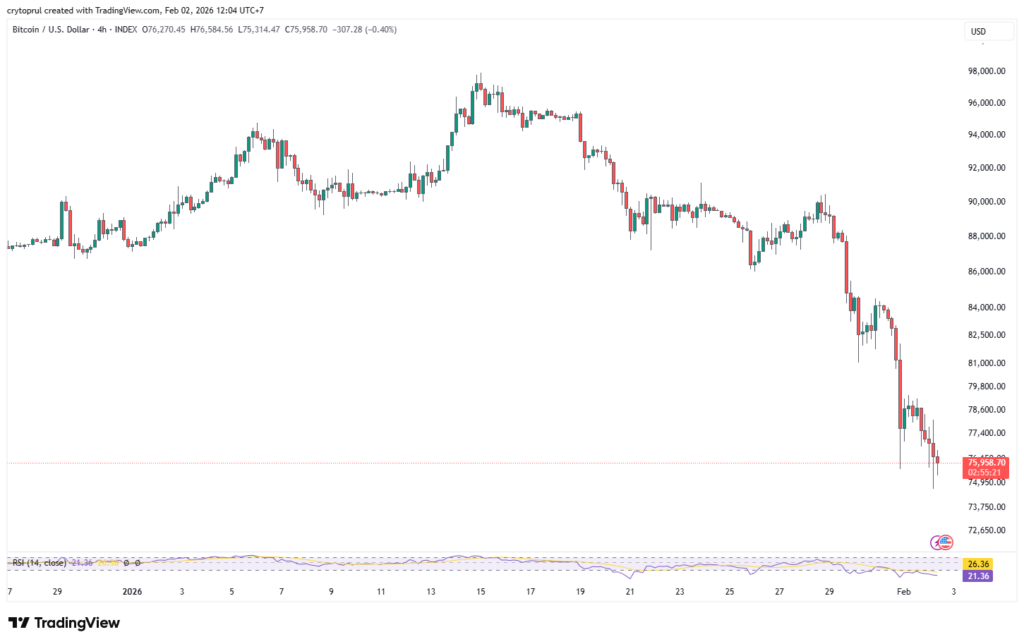
The sharp price movement occurred amidst a backdrop of reduced trading volumes and heightened caution among market participants. Analysts attributed the sudden drop not to fundamental shifts in Bitcoin’s outlook, but rather to the amplified impact of trades in an environment where fewer buyers and sellers are present. This thin liquidity environment means that even relatively small order flows can cause more substantial price swings.
Market Dynamics and Liquidity Concerns
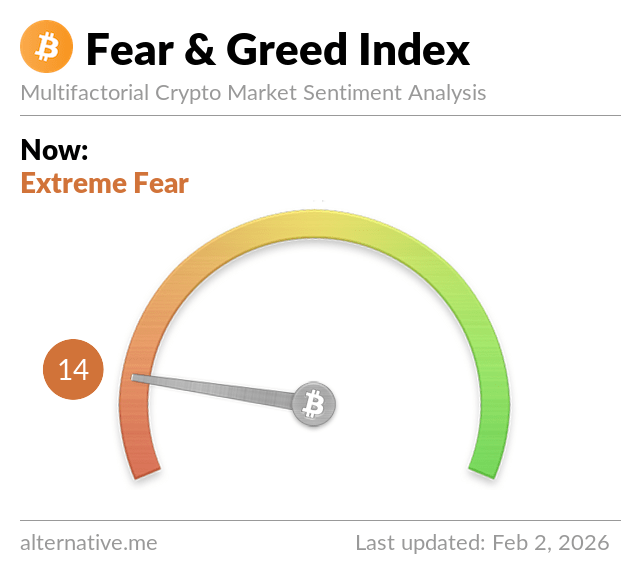
The cryptocurrency market has been grappling with a general lack of robust demand and a cautious sentiment that has dampened speculative trading. Reports from early February indicate that Bitcoin’s price fell to $75,501, accompanied by approximately $520 million in liquidations within a 24-hour period. This surge in liquidations, where leveraged positions are forcibly closed, often exacerbates downward price movements. The Crypto Fear & Greed Index plummeted to 14, signaling “extreme fear” among investors, with the Relative Strength Index (RSI) nearing oversold levels at 35. This indicates a prevailing bearish sentiment, with investors actively seeking to reduce risk exposure.
Analysts have pointed to cascading liquidations as a primary driver of the recent slump, rather than any fundamental negative news. The absence of significant buying pressure means that the market is more susceptible to sharp corrections when selling pressure emerges. This was evident as Bitcoin experienced its fourth consecutive monthly decline in January, a streak not seen since the market downturn in 2018.
Broader Market Influences
The broader macroeconomic environment also plays a role in the current market conditions. Some market observers have linked Bitcoin’s decline to a general shortage of liquidity in the U.S. market, citing the Federal Reserve’s reduced Reverse Repo Facility as a contributing factor to dollar scarcity. This, in turn, has pressured risk assets like Bitcoin. The cryptocurrency’s sensitivity to macro liquidity suggests that a sustained recovery may depend on shifts in central bank policy. However, with uncertainty surrounding potential interest rate changes, the market remains in a precarious state.
Furthermore, geopolitical tensions and shifts in leadership at the U.S. Federal Reserve have added to market uncertainty. Reports of an explosion at Iran’s Bandar Abbas port, for instance, intensified risk-off sentiment, prompting a move towards traditional safe-haven assets like gold and silver. Bitcoin, typically seen as a risk-on asset, has struggled to maintain its upward momentum, failing to consistently respond to geopolitical stress, dollar weakness, or broader risk rallies.
Investor Sentiment and Technical Levels
The prevailing sentiment among investors remains overwhelmingly cautious, bordering on fearful. The Fear & Greed Index has consistently shown readings in the “extreme fear” territory, a condition that historically can precede market bottoms but also signifies significant risk aversion. This lack of optimism is striking, especially given recent positive regulatory developments and increased institutional interest. Many investors feel that the optimism has already been priced in, leading to stalled rallies and weakening conviction.
Technically, Bitcoin has broken below key support levels, including the $84,000 mark which had held since mid-November 2025. The failure to defend these levels has opened the door for further declines, with some analysts projecting potential targets around $74,000 or even lower. The $74,000-$76,000 zone has been identified as a critical support area, with a bounce possible from there, but the current data suggests caution rather than optimism for the near term.
Exchange Activity and Future Outlook
Data on exchange reserves indicates a gradual increase in Bitcoin balances, suggesting more availability for selling, although not necessarily panic selling. This trend, coupled with a decrease in open interest on futures markets, points to traders reducing leverage and adopting a more defensive stance. The ongoing outflows from spot Bitcoin ETFs also signal weakening conviction among mainstream buyers, with many now holding positions underwater.
Looking ahead, the market’s trajectory will likely depend on a confluence of factors, including macroeconomic catalysts, potential shifts in Federal Reserve policy, and the overall appetite for risk assets. While some forecasts remain bullish for the long term, projecting prices in the hundreds of thousands, the immediate outlook is clouded by thin liquidity and prevailing fear. For now, traders remain on edge, closely monitoring price action and liquidity levels for any signs of a sustained recovery.